
The global restaurant online ordering market is expected to reach USD 40.89 billion in 2025 and USD 119.07 billion by 2033. What’s more interesting is that much of this growth will come through digital channels like food delivery apps and websites due to the growing usage of smartphones worldwide. For restaurant owners, this is a signal to work on improving their online systems and get one if they have not yet.
If you are a restaurant owner, this matters to you because more and more people are coming through online channels rather than in person. Now the obvious question: which one should you go for: a website or an app? Well, the answer isn’t that simple, because both have their own benefits. To find the answer, let’s read this blog.
Why This Decision Matters for Your Restaurant?
Deciding between a restaurant app or a website looks like an easy choice at first. But after some time, you get to know it’s not that easy. The single decision of one channel versus another affects your customer acquisition. It also affects the convenience with which your menu is explored and the probability of placing the next order. As customers are very much dependent on their mobile devices, the way you look online is more important than ever.
Online behavior keeps shifting every year, and if your restaurant does not match how customers want to order, you lose customers without even knowing it. A clean website helps with visibility, while an app can easily attract loyal customers. By understanding both options, you can pick something that fits your goals instead of guessing and hoping it works.
Also Read: How to Set Up an Online Ordering System for Your Restaurant
What a Restaurant Website Offers?
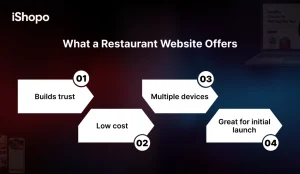
While deciding whether to have a website or an app, one question that comes to your mind is what a website can do on its own. In the case of a restaurant app vs. a website, a website frequently turns out to be the first online point of contact, as it helps new customers to discover your business without the need of a download.
-
Builds trust
A website becomes the first place people check before trying a new restaurant. Most diners search online and look for photos, hours, and menu details just to feel sure about where they are ordering from. This alone will make your restaurant get found by new customers without having to do any other marketing. An updated and clean website, when people visit it, is always a good experience, and it creates confidence.
-
Low cost
If you are starting or working with a tight budget, a website is usually the easiest thing to put out. It does not need heavy tech work or long development cycles. You can launch a simple one first and add things slowly as you grow. This makes the whole process less stressful because updates are quick, affordable, and can be handled without too much back and forth.
-
Multiple devices
A website opens on any phone, tablet, or laptop without asking people to download anything. This is good for first-time customers who only want to check your menu or order fast. Since it loads on all screen sizes, it reaches more people and keeps the experience simple. The easier it feels for customers to get what they want, the better your chances of turning them into regulars.
-
Great for initial launch
What if your restaurant is just starting or you are working on your online presence? A website is the perfect place to start. It allows your brand to be visible, telling your story, and putting pictures of your food to attract more customers and let them know the way to order. You can grow at your own pace without taking on the pressure of app development. A website simply gives you enough space to introduce your place in a friendly and clear way.
Read Also: How to Build an Online Ordering System That Works
What Does a Restaurant Mobile App Bring to the Table?
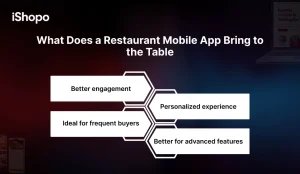
Knowing what a website is capable of makes it clear how a mobile app can be used. In most cases, where one has to decide between a branded restaurant app and a website, apps turn out to be the better solution if you aim for more loyalty, easier repeat orders, and a tighter relationship with your regular diners.
-
Better engagement
A mobile app gives you a direct space on your customer’s phone, which already brings you closer. You can send offers, remind people about their favorite dishes, and make reordering really fast. When customers feel remembered, they return more often. An app also helps you stay in their mind even on days when they are not planning to order anything.
-
Personalized experience
Mobile apps can save past orders, suggest dishes, and create small touches that feel personal. This is pretty effective when you have customers that place orders regularly or are fond of making consistent choices. In the debate between the restaurant app and website, this kind of personalization most of the time favors a definite winner, particularly in the case of restaurants that aim to promote loyalty programs or targeted discounts.
-
Ideal for frequent buyers
If your restaurant has many people who come back again and again, an app can make their routine even smoother. It allows them to skip repeating the same steps every time. Their address, favorites, and payment details stay saved, which makes the whole experience light and quick. Over time, this comfort turns casual buyers into regulars.
-
Better for advanced features
Apps naturally support features like rewards, membership points, referral programs, and push notifications. These tools help you create your own little community of regular customers. When these features are applied well, they increase repeat orders without needing heavy marketing work. In the restaurant app vs. website comparison, apps win when your goal is long-term engagement.
Also Read: QR Code Menu: Benefits & Why Your Restaurant Should Use It
Pros and Cons — Website vs. App (Quick Comparison Table)
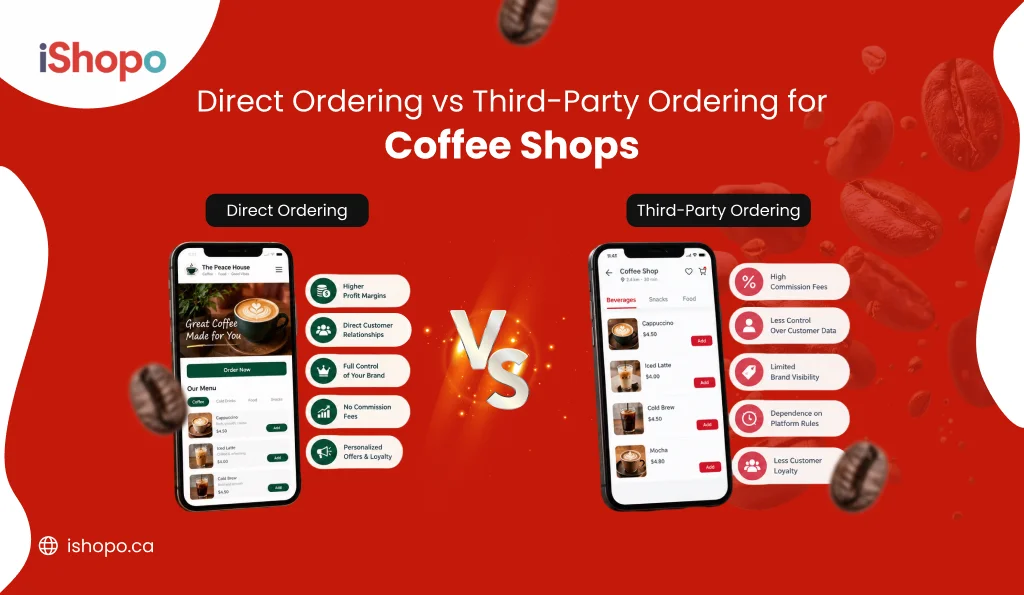
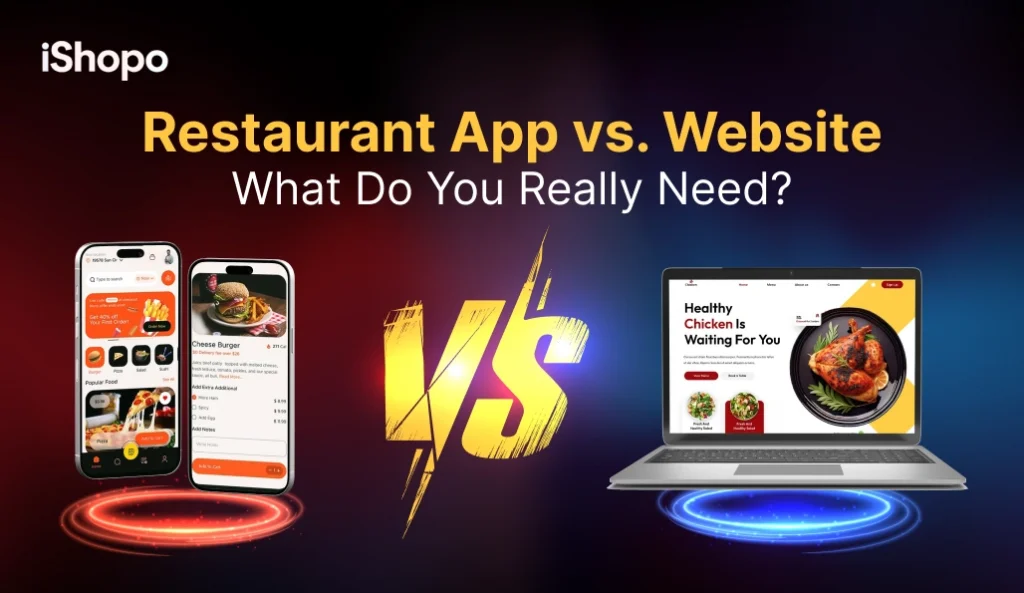
When you look closely at the restaurant app vs. website choice, both options have their own strengths. A website helps you get found, while an app can turn regular customers into loyal ones. This small comparison makes the whole picture easier to understand.
| Feature | Website | Mobile App |
| Cost | Costs less to create and maintain. Good for small or new restaurants. | Higher development cost. Works better once you already have steady customers. |
| Ease of Access | Opens directly on any phone or computer without installing anything. | Needs downloading, which works well only for repeat customers. |
| Discoverability | Shows up on Google searches, helping new people find you fast. | Not great for discovery since customers must know your place already. |
| Customer Loyalty | Basic engagement. Limited personalization. | Strong engagement with saved orders, offers, and quick reordering. |
| Updates | Updates show instantly for everyone. | Requires app updates and approvals depending on the platform. |
| Features | Good for menus, photos, and online ordering. | Better for loyalty points, referrals, rewards, and personalized deals. |
| Best For | New restaurants, small budgets, and first online presence. | Growing restaurants that have regular orders and want deeper loyalty. |
How to Decide What Fits Your Restaurant’s Stage & Goals?

Choosing between the two options becomes easier when you look at what your restaurant really needs today. In the restaurant app vs. website choice, your stage of growth, budget, and customer habits play a big role. These small pointers help you think clearly.
-
Understand Your Goals
In the restaurant app vs. website comparison, the best choice depends on what you want right now. If your main goal is visibility, a website gives you faster reach. If you want to deepen loyalty and repeat orders, an app usually helps more. When you are clear about your goals, the decision stops feeling confusing and becomes more practical.
-
Know Your Budget
Money plays a big part in deciding what comes first. A website works well when you want something simple that does not drain your budget early on. You can slowly improve it as your business grows. If you already have steady customers and want more engagement, an app becomes worth it later when you can invest without stress.
-
Study Customer Behavior
In the restaurant app vs. website journey, looking at how your customers behave tells you a lot. If most of your orders come from first-time visitors or search traffic, a website will support you better. If customers order from you regularly, an app can make things smoother. Understanding these small patterns keeps you from making a rushed or wrong decision.
-
Check Long-Term Plans
Thinking about where you want your restaurant to be in the next year or two helps a lot. If long-term growth is the goal, you might start with a website and add an app later when you have more repeat buyers. This steady approach helps you grow without feeling overwhelmed and lets you build your online presence step by step.
Read Also: How Restaurants Can Save Money With Commission-Free Ordering System
What Many Restaurants Do: Use Both
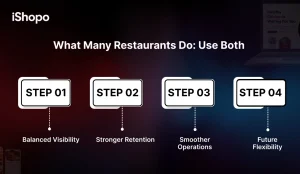
More restaurants now mix both options instead of choosing only one. In the restaurant app vs. website decision, this blend helps you reach new customers while also keeping loyal ones close. It creates a simple flow that works well for long-term growth.
-
Balanced Visibility
In the restaurant app vs. website approach, using both helps you stay visible to new people while building loyalty with regular customers. A website brings search traffic and quick menu checks, while an app supports fast reordering and personal offers. This balance makes your online presence stronger without forcing you to rely on one single channel.
-
Stronger Retention
A website pulls first-time visitors in, but an app helps you hold them for longer. When diners save favorites or get rewards inside the app, they feel more connected to your place. This mix keeps them engaged even on days when they are not planning to order, which naturally increases repeat sales over time.
-
Smoother Operations
In the restaurant app vs. website mix, having both options can reduce pressure on your staff. Customers who prefer quick browsing use the site, while repeat buyers stick to the app for convenience. This spreads out customer behavior evenly and avoids sudden rushes on one single channel, making things easier to handle during busy hours.
-
Future Flexibility
When you use both a website and an app, you leave room to grow at your own pace. You can start simple with your site and later build new features into your app as your customer base grows. This slow, steady path makes expansion feel natural instead of risky or rushed, which is helpful for long-term plans.
Also Check: iShopo – Best Online Food Ordering Software for Restaurants
Questions to Ask Yourself Before Choosing Between a Restaurant App and Website
Choosing the right path becomes easier when you ask a few simple questions. In the restaurant app vs. website choice, your answers reveal what fits your goals, customers, and budget. These points help you think clearly before you commit to anything.
-
What Are Goals?
In the restaurant app vs. website decision, your goals set the direction. If you want more reach and visibility, a website normally works better. If you hope to grow repeat orders or build loyalty programs, an app gives you more tools. When you are honest about your goals, the choice becomes far less confusing and much more practical.
-
How Much Budget?
Budget decides what you can do right now and what you can build later. A website fits perfectly when money is tight, but you still want a solid online presence. Once your customer base grows and you feel more confident, you can invest in an app without stress. This steady path keeps you safe from sudden big expenses.
-
Who Are Customers?
In the restaurant app vs. website comparison, thinking about your customers helps a lot. If most people find you through Google or search maps, a website supports them better. If many buyers order often or stick to the same dishes, an app makes their routine faster and smoother. Understanding their habits stops you from choosing something that does not match their behavior.
-
What Comes Later?
Your plans matter as much as what you need right now. If you want slow and steady growth, starting with a clean website gives you space to learn how your customers behave. Later, when you feel more stable and understand your regular buyers, you can add an app to increase loyalty. This step-by-step way keeps things manageable and avoids rushed decisions.
Conclusion
It is not necessary for deciding between a website and an app to weigh heavily on your mind. When you figure out your objectives, know your customers, and determine how quickly you want to grow, it becomes pretty obvious what the right way is. There are restaurants that initially create a mere website, some develop an app when they have a good number of regular customers, and the majority use both to have the best of everything. The thing that matters most is choosing something that really helps your place go forward.
If you wish for an effortless method to set up your online ordering system for restaurant, have a trendy website, or even get your own branded app without incurring commission charges, then you might want to consider iShopo. They simplify the process of restaurants going online, taking orders, and growing without any hassle. Visit ishopo now.
FAQ
- Do small restaurants need a mobile app right away?
Most small places do not need an app in the early stage. In the restaurant app vs. website choice, a clean website usually works better because it helps people find you fast without spending too much. Apps make more sense once you have steady repeat customers. Starting with a website saves money while still giving your restaurant a solid online presence.
- Which option brings more new customers?
For most restaurants, a website brings more new customers. In the restaurant app vs. website comparison, websites show up on Google searches, which helps people notice your place when they look for food nearby. An app works great later for loyal customers, but discovery starts with a website. This is why many restaurants build a strong site before thinking about an app.
- Is an app more expensive to maintain than a website?
Yes, in the restaurant app vs. website discussion, apps usually cost more to maintain. A website is easier to update and needs fewer technical changes. An app requires regular updates for different phones, new versions, and better performance. Because of this, most restaurants choose a website first and only invest in an app when they have enough regular customers.
- Can restaurants use both a website and an app together?
Yes, and it works well for many restaurants. In the restaurant app vs. website mix, a website helps you reach new people while an app makes life easier for loyal customers. Both options support different needs and create a stronger online presence. Using both gives you discovery, convenience, and better repeat orders without putting all your effort into only one platform.
- How do I know when it’s the right time to build a mobile app?
The restaurant app vs. website decision becomes clearer when you look at your customer behavior. If you notice more repeat orders and familiar names coming back often, it might be the right time for an app. An app makes reordering smoother and gives loyal buyers more comfort. When your base feels steady and engaged, adding an app becomes a smarter step.