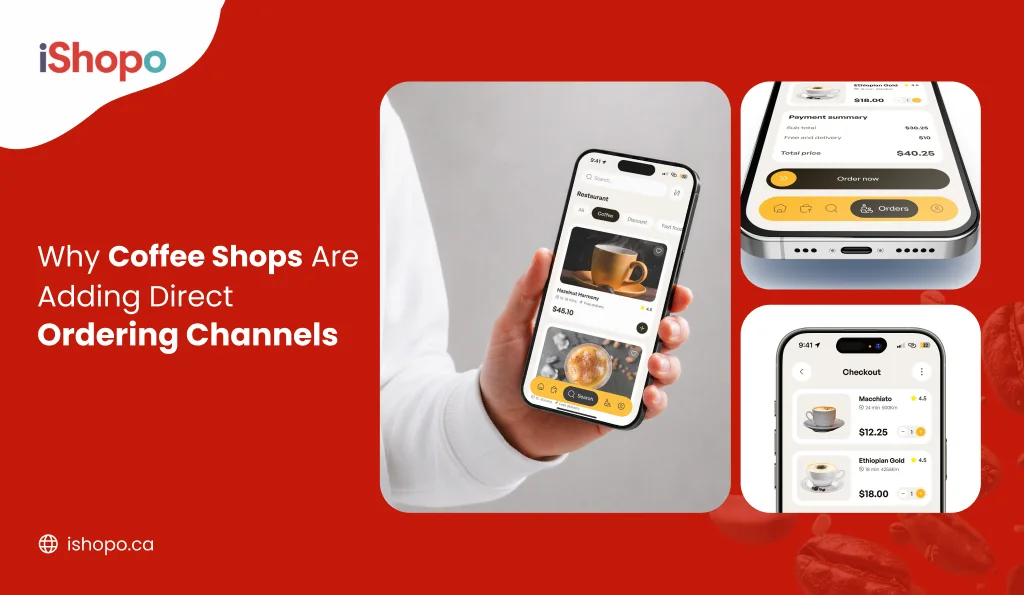
Very few restaurant owners understand that it’s no longer the 1980s. It’s 2025, a high-tech digital world where people order food while sitting at home watching their favorite movie. The same joy that people used to get at a restaurant can now be gotten at home. The online ordering has grown by more than 300 percent more than dine-in orders since 2014. This is changing the restaurant industry forever.
Further, keeping in mind that the restaurant success rate is lowest among other industries, with a high failure rate in the first five years of operation, having a restaurant ordering system is crucial to survive and grow. If you are also a restaurant owner and want to know the best restaurant ordering system, stay with us. In this blog, we are going to discover the top ordering platforms for your restaurant. Let’s dive in.
What Is a Restaurant Ordering System?
Before diving deeper, let’s slow down a bit, because not everyone who runs a cafe or a dosa joint or a busy downtown burger place has the time to decode tech words. A restaurant ordering system is basically the whole setup that takes orders from customers and pushes them straight into the kitchen or staff workflow without the usual back-and-forth chaos. You’ve probably used one yourself without thinking too much about it.
Some restaurants use it for dine-in, some for takeout, some for online delivery, and the smarter ones glue everything together so the orders don’t fight like siblings who want attention at the same time. And honestly, once you see how it makes life easier, you kind of wonder how the old way even survived. Sometimes the simplest thing is the most powerful, and this system fits that feeling perfectly.
Also Check: Best Restaurant Marketing Ideas to Boost Sales
10 Best Online Ordering Systems for Restaurants in 2025
Finding the best restaurant ordering system in 2025 feels almost like choosing shoes. Everything looks great at first, but not everything fits the same once you actually walk around. Restaurants have their own styles too. A food truck, a fancy Italian restaurant, a small family cafe, and a fast takeout place all want different things. So choosing the right system is more about what feels right for your flow. The market is full of options, and some brands look shiny on the outside but don’t really help once your place gets busy. That’s why knowing what works in real life matters more.
| Brand | Branded Website/App | Best For | Pricing |
| iShopo | Best Branding features as compared to others | All restaurants and coffee shops | Paid plans start at just $299/month |
| ChowNow | Limited branding | Small restaurants avoiding commissions | Paid plans start at $119/month |
| BentoBox | Strong branding features | Restaurants that value design and branding | Custom pricing |
| GloriaFood | Basic website builder | Small restaurants wanting free/low-cost tools | Free plan with optional paid services |
| Menufy | Branded website provided | Medium-sized restaurants need a simple flow | Customized pricing plans |
| Square Online | Basic branded pages | Small to mid-size places using Square POS | Paid plans start at $49/month + processing fee |
| Toast | Optional branded tools | Restaurants with high volume and dine-in flow | Paid plans start at $69/month |
| Restroworks | Basic branding | Restaurants planning long-term scaling | Custom pricing |
| Orderable | Light branding options | Small restaurants want full control | Paid plans start at $104 per website per year |
| Flipdish | Strong branding tools | Restaurants want marketing and branded ordering | Paid plans start at $99 per month |
1. iShopo

iShopo is one of those systems that surprises you because it looks simple at first, but when you actually explore it, you realize it covers almost every part of the job. It supports online orders, branded apps, QR menus, pickup, delivery, and even POS integration without making your head spin. Restaurants get full control without heavy commissions, and the layout feels clean enough that even new staff pick it up quickly. It’s basically built for places that want flexibility without dealing with tech stress every day.
Key Features
- Zero-commission orders so restaurants keep 100% of their revenue.
- Custom-branded mobile app and web ordering that matches your restaurant’s look and feel.
- Real-time POS integration so menu, pricing, inventory, and orders stay synced automatically.
- Easy one-tap reorder and smooth checkout for customers, making repeat orders simple.
- Built-in tools for push notifications, loyalty rewards, and order tracking to boost customer retention.
2. ChowNow

ChowNow keeps things calm for restaurants that are tired of paying huge commissions everywhere. It lets restaurants take orders directly and gives them enough tools to manage customer flow without being stuck in confusing dashboards. The menu setup is clean, checkout is quick, and customers don’t feel like they are being pushed into strange add-ons. ChowNow works especially well for smaller places that want a steady ordering system without feeling trapped by third-party rules.
Key Features
- Let restaurants take direct orders without paying heavy commissions.
- Gives a clean menu setup that staff can update quickly.
- Supports fast and simple customer checkout.
- Helps small restaurants keep control of their customer flow.
- Works without confusing dashboards or complicated settings.
Also Read: How to Build an Online Ordering System That Works
3. BentoBox

BentoBox works nicely for restaurants that care about design as much as order flow. Their pages look neat, and the ordering path is straightforward enough for even less techy customers. It also gives restaurants a website, marketing tools, and online ordering, all tied together so things stay consistent. BentoBox feels like a mix of branding and function rather than just another tool. It gives restaurants a way to look good and work smoothly at the same time.
Key Features
- Offers beautiful restaurant websites with built-in online ordering.
- Gives a smooth ordering path for customers of all ages.
- Includes marketing tools to help restaurants stay visible.
- Keeps branding, menus, and orders consistent in one place.
- Combines design and function without overwhelming users.
4. GloriaFood

GloriaFood is widely accepted by restaurants that want to have a cheap beginning without losing vital features. It allows you to install online ordering, table reservations, delivery zones, etc., and still, here you are holding control. Quite a lot of small eating places make use of it because it does not come with extra sound or complicated layers. It’s fast to set up, works on phones and laptops, and customers usually place orders without any confusion or long steps.
Key Features
- Provides free online ordering tools with essential features included.
- Lets restaurants set up delivery zones easily.
- Supports table reservations and dine-in management.
- Works smoothly on both phones and laptops.
- Simple to set up without complex tech steps or hidden layers.
Read Also: QR Code Menu: Benefits & Why Your Restaurant Should Use It
5. Menufy

Menufy is known for being simple, quick, and steady. Restaurants that don’t want to get into confusing tech setups find this one easier to handle. Their ordering flow is clean, they support delivery partners, and they even help with branded websites. Customers usually enjoy the clear checkout system, and restaurants appreciate that orders don’t get lost during rush hours. Menufy fits well for medium-sized places trying to keep everything smooth without hiring extra people for tech work.
Key Features
- Offers a clean and simple online ordering experience.
- Supports delivery partners to handle customer drop-offs.
- Gives restaurants branded websites without extra hassle.
- Handles rush-hour orders without losing or duplicating tickets.
- Easy for medium-sized restaurants to use without extra staff training.
6. Square Online

Square Online has become the comfort choice for many restaurants, especially the ones that don’t want a complicated start. The setup doesn’t feel overwhelming, and even people who aren’t too friendly with tech end up managing it fine. It gives simple tools, menu management, and the ability to take orders online without losing your mind over it. And if you already use Square POS, everything fits together just like two puzzle pieces that were supposed to meet. It might not have the most advanced options for huge chains, but for small and mid-size places, it does the job way better than expected.
Key Features
- Works well with Square POS for a smooth workflow.
- Let restaurants launch online ordering quickly.
- Supports easy menu edits and updates.
- Clean checkout that customers understand instantly.
- Great choice for small and mid-size restaurants.
Also Read: iShopo – Best Online Food Ordering Software for Restaurants
7. Toast

Toast is something you’ll see everywhere now. From small cafes to busy restaurants with long lines, it’s like the system finally understood how restaurant folks think. It manages menus, online orders, tables, deliveries, staff, and everything under one roof. Some people say Toast is like that friend who shows up right on time and doesn’t disappear when things get messy. It is especially good for restaurants that want smoother online ordering and a proper flow inside the place. The pricing is a little unpredictable sometimes, but the performance makes up for it most days.
Key Features
- Covers online ordering, tables, menus, and staff tools together.
- Built specifically for restaurant speed and kitchen flow.
- Supports dine-in, delivery, and pickup in one system.
- Helps simplify busy service hours with clear dashboards.
- Works well for both small cafes and large restaurants.
8. Restroworks

Restroworks brings together restaurant operations in one clean system without trying too hard to look fancy. Their restaurant ordering system keeps things simple but strong. It supports digital menus, inventory, customer data, and online ordering in a way that doesn’t leave you confused. They have tools that help growing restaurants keep track of everything without drowning in updates. It is reliable, especially for restaurants planning to scale over time. Many people like that it doesn’t try to do too much and still manages to cover everything that matters.
Key Features
- Tracks digital menus, orders, and inventory in one platform.
- Gives restaurants simple control over customer data.
- Supports scaling for restaurants planning long-term growth.
- Avoids unnecessary features that clutter the system.
- Offers strong reliability for daily operations.
Read Also: How Restaurants Can Save Money With Commission-Free Ordering System
9. Orderable

Orderable is a different kind of fun because it’s built for small restaurants that don’t want to depend on big third-party apps anymore. It gives restaurants control over their online orders without sharing a huge part of their money in commissions. You can customize menus, show your timing, and manage incoming orders, and customers get a clean online checkout without getting lost. It feels more flexible than many systems out there and is friendly for restaurants that want to keep things personal with customers.
Key Features
- Helps restaurants avoid big commission fees completely.
- Lets owners customize menus and timing easily.
- Supports clean online checkout for customers.
- Ideal for small restaurants wanting full control.
- Keeps ordering flexibly without heavy tech requirements.
10. Flipdish

Flipdish is great for restaurants that want branding, control, and smooth ordering. It doesn’t try to confuse you with too many layers. Instead, it builds a path where customers order quickly, and you receive everything in real time. Flipdish also supports marketing tools, which means restaurants can keep customers coming back without depending on big platforms. It’s reliable for restaurants that want a restaurant ordering system that feels more like a partner and less like a tool.
Key Features
- Gives restaurants branded online ordering pages.
- Supports real-time order updates and smooth flow.
- Offers marketing tools to increase repeat customers.
- Avoids confusion with simple navigation.
- Works like a partner, not just another tech tool.
Also Read: How to Set Up an Online Ordering System for Your Restaurant
Key Features in a Restaurant Ordering System
Choosing a restaurant ordering system is not the same as buying a new fridge, where you just check the size and hit purchase. This needs a little digging. A restaurant’s daily work can get pretty messy, and the system you pick should help carry the weight rather than add more to your plate. Some systems shine with features that look great on paper but fall apart when rush hour hits. Others look simple but prove to be powerful once real customers start ordering through them. So the next few points help you see what matters beyond the obvious.
-
Easy Menu Control
Your menu should feel like a living thing, not a frozen document. A good restaurant ordering system lets you change prices, photos, items, availability, and combos quickly. Restaurants deal with sudden stock problems and random busy days, so menu edits should be fast. If your staff needs ten steps to hide a dish that ran out, something is wrong. A simple dashboard that lets you click and update instantly can save you from customer irritation and staff confusion during peak times.
-
Smooth Online Ordering
Customers don’t want to see weird buttons when they’re hungry. So the online ordering flow should feel simple, natural, and almost invisible. A customer should be able to pick an item, add toppings, choose pickup or delivery, pay, and leave. That’s it. A good restaurant ordering system makes every step easy. If customers start calling and saying they can’t understand the order flow, then the system is failing. Real convenience is quiet and clean, not loud and flashy.
-
POS Integration
A system that negatively affects your POS is like two people who work in the same room but refuse to look at each other. POS integration is the way to ensure orders do not get mixed, lost, or printed twice. When the restaurant ordering system is well synchronized with POS, it is the kitchen that gets the right order, the cashier sees the right bill, and there are fewer disputes in the staff room. Proper integration is time-saving and decreases the number of errors, and thus, the staff can concentrate on serving instead of trying to understand the handwriting of order slips.
-
Order Tracking
Nobody likes waiting blindly. Customers want to see if their food is being prepared, packed, or on its way. A restaurant ordering system with real-time tracking reduces anxiety and customer calls. It also builds trust. When customers see updates, they don’t feel ignored. Staff also benefit, because they don’t need to explain the same thing twenty times. Tracking makes the whole ordering journey calmer and more organized for everyone.
-
Marketing Tools
Restaurants often forget that customers need reminders. A restaurant ordering system with simple marketing tools like coupons, push alerts, and email reminders helps a lot. You don’t need anything complicated. Just enough to reach people who ordered before and bring them back. When your system helps you stay in touch without being annoying, you get a steady flow of repeat customers who appreciate tiny things like weekend discounts or birthday deals.
Read Also: Restaurant App vs. Website: What Do You Really Need?
Conclusion
Choosing the right restaurant ordering system in 2025 is not something to be taken lightly. Customers want comfort, speed, and a smooth path from menu to checkout, whether they are at home or waiting outside your place. When a restaurant uses a system that actually fits its daily flow, the whole place feels lighter. Orders move right, staff stay calm, and customers return because the experience feels easy.
If you want to run a stronger and steadier business, picking a system that supports your style is one of the smartest moves you can make. And if you want a setup that stays simple while helping you grow, you might want to look at iShopo. It quietly solves problems many restaurants deal with every day.
FAQ
- Why do restaurants need a restaurant ordering system?
Restaurants deal with so many small problems in a single day that a clean ordering system becomes a big help without anyone noticing at first. It cuts mistakes, moves orders quickly, and keeps customers from waiting around. Staff also feel less pressure because everything comes in neatly. When the whole flow stays smooth, restaurants serve better, and customers leave happier.
- Does a restaurant ordering system help small cafes, too?
Yes, small cafes probably feel the improvement even more than bigger places. They get fewer confusing phone calls and cleaner online orders, and the staff can focus on customers instead of scribbling notes. A simple system keeps things steady even on days when the place gets unexpectedly full. It makes small cafes look more professional while keeping their cozy feel alive.
- How do I choose the right restaurant ordering system?
Start by thinking about your daily routine. If your biggest problem is wrong orders, go for strong menu control and POS sync. If customers often ask for online ordering, choose a system with a clean checkout. Avoid picking something crowded with features you will never use. Choose the one that feels comfortable and solves the real problems inside your restaurant.
- Are these systems hard for staff to learn?
Most modern systems are simple enough that staff get used to them faster than expected. The buttons are clear, the steps make sense, and mistakes drop once everyone understands the flow. Training usually takes only a short time. After a few days of use, the team starts moving naturally with it, almost like they have been using it for years.
- Do customers trust online ordering?
Yes, customers actually prefer online ordering now because they feel more in control and don’t need to wait for someone to pick up the phone. When they see the order status update in real time, it builds trust. They can double-check items, pay easily, and relax until their food arrives. A smooth ordering system makes the whole experience calm and clear.