
It is kind of challenging to think about how to run a restaurant nowadays without comparing it to juggling ten different things at once, especially when the customer habits are continuously changing in a way that they prefer quicker and smoother methods of ordering food online. Customers demand to have the choices that are fast, menus that are clear, and the liberty of making an order by themselves without waiting for anyone.
The worldwide online food delivery market is estimated to reach from USD 359.46 billion in 2025 to USD 1539.34 billion by 2032. The increase in a market like this is a clear indication of how customers strongly prefer digital ordering and the amount restaurants can gain if they do it right.
Indeed, if one is to think about the impact of such an action, the connection with the experience is actually stronger. In that case, the person scrolling through a menu, choosing toppings, making a payment in a few seconds, and receiving updates in real-time is actually forming a bond with the experience. They remember how easy it felt. That memory shapes where they choose to order the next time.
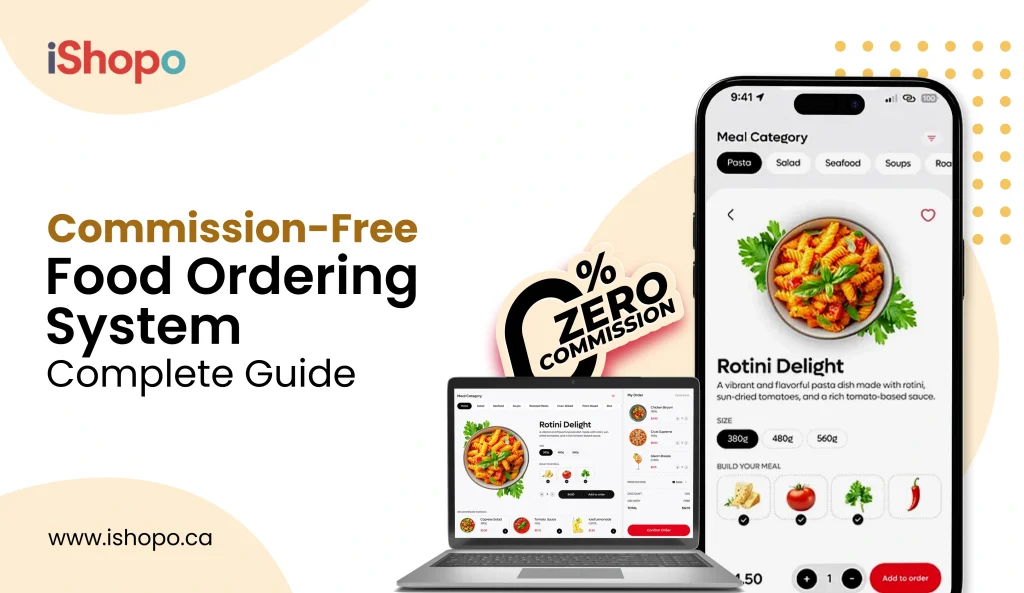
For restaurants, this shift opens a huge chance to grow. Commission-free ordering systems give owners more control, better profits, and a smoother way to handle busy hours.
In this blog, you will see how these systems help restaurants save money, keep customers coming back, and build a strong digital flow of orders.
TL;DR
- Commission-free ordering systems help restaurants keep more profit without paying heavy fees.
- Direct ordering gives customers a smoother, faster, and more reliable experience.
- With a zero-commission ordering system, restaurant owners get full control over their menu, data, and customer relationships.
- Platforms like iShopo offer zero-commission setups that make online ordering simple to launch.
Key Points
- The blog covers what a commission-free ordering system is and its benefits.
- A commission-free ordering system gives full control over customer data, provides a better customer experience, and helps in a stronger brand identity.
- The 3-step process to set up an online ordering system consists of picking a platform, adding a menu, and connecting integrations.
- The best tips for marketing an online ordering system are to talk about it everywhere, ask your customers about it, and make the menu visible online.
What Are Commission-Free Ordering Systems?
Commission-free ordering systems give restaurants a simple way to take online orders without sharing a portion of every sale. You run your own space, set your own rules, and keep your money where it belongs. When I first looked at how independent places use these tools, it honestly felt like a breath of fresh air. No confusing cuts on every order, no waiting for someone else to fix a tiny menu change. It feels more direct, almost like talking to customers across the counter, just through a screen. And who wouldn’t want that kind of control back?
What surprises many owners is how much smoother things feel once they switch to commission-free ordering systems. You get one clean dashboard, one menu to manage, and one source of truth for every order. It takes away that strange feeling of being pulled in different directions by delivery apps. It also opens the door to building real customer relationships instead of just dealing with usernames you never see again. When restaurants realize they can save money and still keep things personal, well, the whole idea starts to make a lot more sense, doesn’t it?
15 Benefits of Commission-Free Ordering Systems
Switching to a setup like this feels a bit like clearing clutter from a busy counter. You suddenly notice how much easier things can run when you stop paying extra fees and start owning the whole process. And once you look closer, you’ll see these benefits touch almost every corner of daily restaurant life.
1. Higher Profit Margins Without Third-Party Fees
Running a restaurant already feels like juggling ten things at once, so losing money on every order hurts more than people admit. With commission-free ordering systems, the math finally leans in your favor. You keep what you earn, plain and simple. I’ve talked to owners who said the first month felt almost shocking because the savings showed up so clearly. When you stop sharing parts of every sale, your margins breathe again. And honestly, when has extra profit ever been a bad thing?
2. Full Control Over Customer Data
Most restaurant folks don’t realize how blind they feel until they finally get their own data. Suddenly, you see what people buy, when they order, what dishes they return for, and even the patterns that explain slow days. This information helps you shape better offers and improve loyalty without guessing. It feels almost like switching on a light in a dim room. You understand customers in a more personal way, which makes every marketing effort hit a little closer to home.
3. Better Customer Experience
Using commission-free ordering systems feels smoother for customers, too. They don’t have to scroll through random listings or deal with confusing third-party interfaces. Your menu loads fast, your instructions stay accurate, and the whole order flow feels natural. When things move this cleanly, customers feel more confident placing orders. And isn’t that the whole point, making people feel like they’re in good hands? A few restaurants told me they saw fewer angry calls within days, just because the flow got easier.
4. Stronger Brand Identity
Your brand deserves a space that feels like you, not a crowded app shelf. When you design your own ordering page, your colors, photos, and voice finally stand out the way they should. You basically create a tiny digital version of your restaurant vibe. It’s wild how a familiar color or style can make customers feel more connected. This small control adds up and slowly builds recognition, which every restaurant quietly hopes for, even if they never say it out loud.
5. Faster Order Processing
Working directly without middle layers cuts down delays that usually cause headaches. Orders drop straight into your system instead of bouncing through some third-party channel. It’s almost like removing a tiny traffic jam you didn’t know was there. Staff members feel less rushed, customers get their food quicker, and things just run more normally. And the best part is how everyone notices the difference without you having to brag about anything.
6. Easy Menu Updates Anytime
Using commission-free ordering systems means you can tweak prices, add new dishes, or switch off messy items without waiting for approval. Imagine realizing you’re out of an ingredient and fixing the menu in seconds instead of apologizing to customers later. Owners often say this freedom feels like finally having the keys to their own house. Quick edits keep your menu honest and up-to-date, which stops confusion before it even begins.
7. More Repeat Orders and Customer Loyalty
When you manage everything yourself, building loyalty feels more natural. You can send little rewards, create simple deals, or even share personal notes that make customers smile. One cafe owner told me how a small birthday coupon turned strangers into regulars. These tiny gestures work because they feel personal, not automated. And once people feel connected, they come back on their own, without needing to be pushed by expensive ads.
8. Increased Average Order Value
With commission-free ordering systems, upselling doesn’t feel forced. You can suggest add-ons, combos, or little extras right when customers are already hungry. Most folks don’t mind clicking one more item when the flow feels friendly. Some restaurants see a surprising jump in basket size within weeks. It’s funny how a simple suggestion like adding fries or a dessert can nudge orders higher without coming across as salesy.
9. Better Integration With POS and Payment Systems
When everything talks to each other smoothly, work feels less stressful. Your POS reads orders correctly, payments settle without fuss, and staff don’t waste time fixing mismatched tickets. This neat connection cuts errors that usually keep people stuck in the back counter. Once the team trusts this flow, the whole service feels lighter. It’s one of those improvements you quietly appreciate after a long shift.
10. Real-Time Order Tracking for Customers
People love knowing what’s happening with their food. Using commission-free ordering systems lets customers follow updates without calling the restaurant ten times. This simple transparency builds trust because customers don’t feel forgotten. It also saves the team from constant interruptions. Everyone stays calmer, and honestly, calmer kitchens usually make better food. The fun part is hearing customers say they felt taken care of just because they could track their order.
11. Lower Marketing Costs
Marketing becomes smarter when you don’t depend on pricey third-party exposure. You can reach customers directly through email, social posts, and simple loyalty deals that cost almost nothing. Owners often tell me how relieved they felt when they realized most customers actually prefer ordering straight from them anyway. Once you keep that channel clear, you don’t need to spend huge amounts chasing attention that should come naturally.
12. Ability to Run Custom Promotions
With full control, you get to play around with deals the way you want. Maybe a weekday combo, a rainy day discount, or something fun for your local crowd. You’re not trapped in rigid campaign formats that never fit your vibe. These small experiments often teach you what customers love without spending big money. And there’s something pretty satisfying about watching a promo you created actually bring people in.
13. Reduced Order Errors
You fix so many mistakes simply by avoiding middle steps. Orders come in clear, notes stay intact, and staff don’t need to decode scribbles. It’s amazing how much peace comes from removing one messy layer. And when customers get exactly what they ordered, they notice it more than you think.
14. Freedom to Build Long-Term Customer Relationships
Using commission-free ordering systems gives you the room to talk to customers in a more personal way. You can send thoughtful updates, share stories, or remind them about something new on the menu. These small touches feel human, not automated. People enjoy that, especially when so many things online feel distant. Over time, these tiny interactions build trust, and trust turns one-time buyers into familiar faces.
15. Better Scalability for Multi-Location Restaurants
Managing several outlets feels easier when one system controls everything. You can adjust menus, watch sales, and compare locations without jumping through hoops. It also helps new branches settle in quicker because the setup stays familiar. Owners handling multiple spots often say this unified view saves their sanity. Once everything sits under one roof, expansion stops feeling scary and starts feeling doable.
Important article: Top 15 Digital Ordering Platforms for Cafés in 2026
Step-By-Step Process To Set Up An Online Ordering System
Setting up your own system feels less complicated once you break it down into small steps. And honestly, most restaurants already do half of this work without noticing. You just pull everything into one place and make it easier for customers to order without bouncing through different apps. It’s kind of nice seeing it all come together in a clear flow. Here’s where you start.
-
Pick A Platform
Choosing a platform for commission-free ordering systems feels a bit like picking the base of a good recipe. If the foundation is strong, everything else falls into place without much fuss. And here’s the funny part: many platforms quietly take 15 to 30 percent commission per order, which adds up faster than most owners want to admit. That’s why a tool like iShopo stands out, because it charges zero commission and still keeps the setup simple. Look for something easy to use, doesn’t slow you down, and actually fits the way your restaurant moves on a busy day. I’ve seen owners jump into fancy tools and later realize they barely use half the features. Keep it simple, trust what feels natural, and pick something you won’t dread opening every morning.
-
Add Menu
Your menu is the heart of commission-free ordering systems, so it deserves a little extra care. Add clear photos, simple descriptions, and honest prices because customers really notice small details. When you build it yourself, you get the chance to show the personality behind your food instead of squeezing into a third-party template. I sometimes laugh at how one well-written menu note can get people curious enough to try something new. Take your time here, because a clean menu makes ordering easier and a bit more fun for everyone.
-
Connect Integrations
This part ties everything together so your commission-free ordering systems run without hiccups. Hook up your POS, payment gateway, and any tools you already use. It removes the tiny annoyances that slow teams down, like mismatched orders or delayed payment updates. I’ve heard chefs say they felt the difference on day one because the flow suddenly felt smoother. Once everything syncs, you get a setup that works quietly in the background while you focus on cooking and serving instead of chasing technical issues.
Tips for Launching and Marketing Your Online Ordering
Launching something new always brings a tiny mix of excitement and nerves, especially when you want people to actually use it. And with commission-free ordering systems, you get this nice advantage of owning the whole space, so the way you promote it feels a lot more personal. You’re not shouting into a crowded app anymore. You’re inviting customers straight into your own little corner. Let’s look at a few simple tips that help your launch feel smoother and a bit more fun.
- Show your staff the flow: Walk your team through the ordering steps so they feel relaxed explaining it to customers.
- Try real-life mock orders: Pretend you’re a customer and place a few orders to spot anything that feels slow or confusing.
- Give a small first-order treat: A little perk like a free add-on or a tiny discount makes people more willing to try your new system.
- Talk about it everywhere: Mention the launch on menus, receipts, your front counter, and even in a quick story on social media.
- Ask customers what they think: A short message or tap-to-rate pop-up can tell you what needs fixing early on.
- Add a simple loyalty perk: Offer a point or a small reward for people who order more than once through your site.
- Make your online menu visible: Add a clear “Order Online” button on your website and keep your Google listing updated.
- Celebrate direct ordering: Remind customers that they help your restaurant more when they order straight from you instead of third-party apps.
Also, read: Cafe Online Ordering System: Features, Challenges & Setup Process
Conclusion
Running a restaurant already feels like a daily marathon, so having a system that saves money, cuts chaos, and brings you closer to your customers almost feels like a small relief you didn’t know you needed. Commission-free ordering systems give you more control, more freedom, and, honestly, a cleaner way to grow without losing a portion of your earnings. If you ever feel ready to switch to something smoother and more your style, you can check out tools like iShopo and see how it fits your flow.
FAQs
1. What exactly are commission-free ordering systems?
Commission-free ordering systems are online tools that let restaurants take orders without giving away a percentage of every sale to third-party apps. You manage everything yourself, from menu changes to customer interactions, which feels way more natural once you get used to it. A lot of owners say it’s like finally having their own clean digital counter. You keep more profit, stay closer to your customers, and avoid those painful 15 to 30 percent cuts that take money quietly every month.
2. Why do restaurants prefer commission-free systems over third-party apps?
Most restaurants switch because the cost difference hits them hard. Those big apps charge huge commissions, and after a while, owners feel like they’re working just to pay them off. With commission-free ordering systems, you keep your earnings, control your menu, and actually know who your customers are. There’s a sense of relief in not depending on outside platforms. Plus, it just feels good to run things your own way without constantly worrying about shrinking margins.
3. Do commission-free ordering systems really improve customer experience?
Yes, and usually faster than expected. Customers get a cleaner path to order, fewer errors, and faster updates. They’re not stuck scrolling through cluttered app listings or dealing with random interface issues. When the system belongs to your restaurant, the entire experience feels more personal and calm. People trust you more because communication is direct, not filtered. Many restaurants tell me customers even call less because tracking and confirmations work the way they should.
4. Can small restaurants benefit from commission-free ordering systems too?
Absolutely. Smaller places sometimes benefit the most because every dollar matters. When you’re not paying commissions, you can finally breathe a little and use that money for ingredients, staff, or small improvements. Even tiny cafes have seen more repeat orders because customers feel the system is simple and close to the brand. You don’t need a big team or tech background. Most tools walk you through setup, and you adjust things as you go, which makes it super doable.
5. Are these systems difficult to set up and manage?
They look intimidating at first, but once you start, you realize it’s mostly simple steps. You add your menu, connect payments, and test the flow, and you’re nearly set. The good thing is that most platforms are built for real restaurants, not tech pros, so everything is straightforward. The hardest part is usually the first fifteen minutes of figuring out the dashboard. After that, updates feel as easy as sending a message. And once it’s live, it runs quietly while you focus on serving food.