
If you walk into any restaurant kitchen today, whether it’s a small cafe, a thriving cloud kitchen, or a popular dine-in spot, you’ll notice one thing: almost every business has a tablet buzzing with online delivery orders. And in many cases, that tablet belongs to Uber Eats.
But behind every “New Order Received” notification lies a question almost every restaurant owner asks sooner or later:
“How much am I actually earning after Uber Eats takes its commission?”
This question has become one of the biggest concerns in the food service industry. Many restaurant owners love the visibility and convenience the platform brings, yet feel the financial pressure when they analyze their monthly settlement statements.
Some feel shocked. Some feel stuck.
Many silently wonder whether they’re working for their own business… or for the delivery platform.
This blog aims to remove the confusion and bring full clarity. No sugarcoating. No complicated jargon. Just a simple, down-to-earth, and easy-to-understand explanation of the reality of what restaurants really pay when they team up with Uber Eats, the reasons for these fees, and the ways in which restaurants can think through and make the right decisions to be able to keep their profits.
Let’s break it all down.
TL;DR
- Uber Eats increases visibility but significantly reduces restaurant profit margins.
- Multiple fees combine, cutting deeper into already thin restaurant earnings.
- Promotions cost restaurants money, further reducing order profitability.
- No customer data access restricts loyalty building and remarketing efforts.
- Direct ordering platforms improve margins and reduce long-term Uber Eats dependency.
Key Points
- Uber Eats provides reach and convenience, but high marketplace, delivery, and promotional fees collectively reduce the actual profit restaurants earn per order.
- Restaurants often underestimate how commissions, discounts, processing charges, and rising operational costs combine, leaving them with extremely low net margins after each sale.
- Without customer data from Uber Eats, restaurants cannot run loyalty programs, remarketing campaigns, or retention strategies, weakening long-term business growth opportunities.
- Heavy reliance on Uber Eats places restaurants at financial risk, as pricing, visibility, and profit depend on platform algorithms and changing commission structures.
- Building a direct ordering system using enterprise web solutions helps restaurants reclaim profits, access customer data, reduce fees, and achieve sustainable long-term success.
Why Restaurants Join Uber Eats in the First Place
Before diving into fees, it’s important to understand the logic behind joining Uber Eats.
Most restaurants don’t join because they think it will make them rich.
They join because:
- Customers are already on Uber Eats.
- Competing restaurants are on Uber Eats.
- New brands need visibility quickly.
- Delivery logistics are difficult and expensive to handle alone.
- People trust ordering from established platforms.
In today’s world, customers often search for food only on delivery apps. If your restaurant doesn’t appear there, many people assume you don’t exist.
Uber Eats provides instant access to:
- A massive user base
- Built-in delivery network
- App visibility
- Online credibility
- Marketing opportunities
So restaurants sign up, hoping to increase revenue and reach new customers.
And at first, the excitement is real.
- Orders start coming in.
- Your restaurant name shows up in a professional app.
- Customers you’ve never met are suddenly trying your food.
But then the financial reality becomes clearer, because every order comes with a commission.
Also Read: Benefits of Commission-Free Ordering Systems
What Are Uber Eats Commission Fees?
Uber Eats charges restaurants a percentage of every order placed through their platform. This fee compensates the platform for:
- Bringing in customers
- Providing delivery infrastructure
- Handling payments
- Maintaining the app
- Supporting customer issues
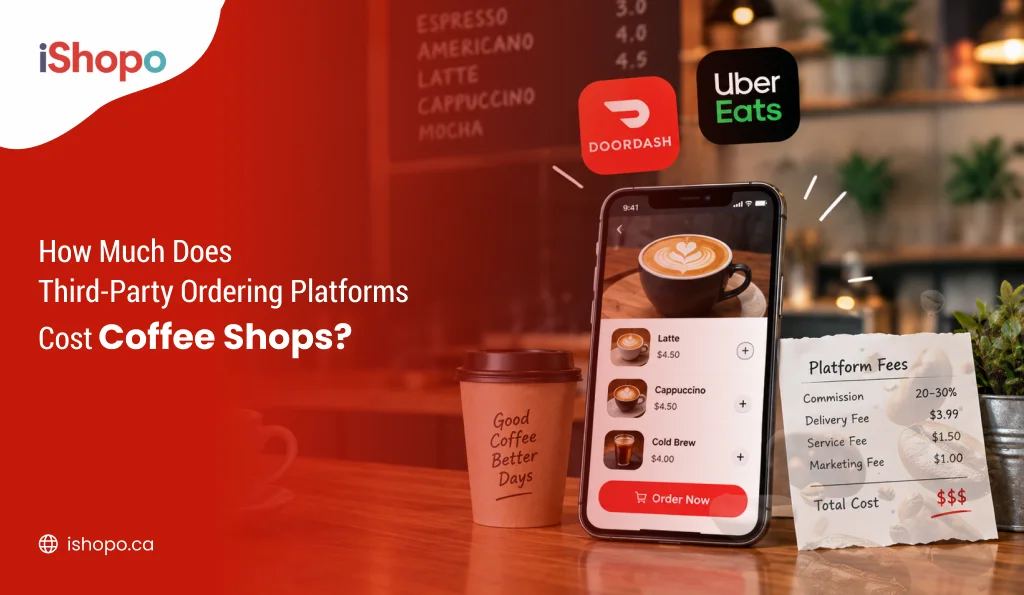
In most countries, the total commission typically ranges from 15% to 30% per order.
To understand what restaurants really pay, we need to break down the different types of fees involved.
Types of Uber Eats Fees and Their Real Impact
Restaurant owners often feel confused because Uber Eats doesn’t charge just one fee. Instead, multiple fees combine to create the total commission.
Below is a clear, relatable breakdown.
1. Marketplace Fee (The Main Commission)
This is the primary commission Uber Eats charges restaurants in Canada. The typical marketplace fee ranges between 25% and 30% per delivery order.
This fee covers:
- Listing and showcasing your restaurant on the Uber Eats app
- Delivery logistics and coordination
- Order processing and support
- Customer service
- Platform operations and maintenance
Example:
If a menu item is priced at $20 CAD, and Uber charges a 30% commission, you immediately lose $6 CAD before accounting for food costs, packaging, staff wages, and rent.
2. Delivery Fee (If Uber Eats Handles Delivery)
If you rely on Uber Eats’ delivery partners, this cost is either included in the marketplace fee or added separately (depending on the region within Canada).
This fee covers:
- Delivery partner payments
- Route and logistics management
- Peak-hour bonuses
- GPS tracking
- Safety and insurance coverage
Without their service, you’d have to hire, train, insure, and manage your own drivers, which is significantly more costly in Canada.
3. Pickup-Only Commission
If your restaurant handles delivery independently or offers pickup only, Uber Eats charges a much lower commission, typically 10%–15% in Canada.
Common for:
- Cafes
- Bakeries
- Fast-casual restaurants
- Businesses with their own delivery drivers
You still get app visibility and order flow, but at a lower cost since Uber isn’t providing delivery.
4. Marketing and Promotion Fees
This is one area many Canadian restaurant owners misunderstand.
Every promotion, such as:
- “$5 OFF”
- “Buy One Get One Free”
- “Free Delivery”
- Percentage discounts
is paid by YOU, not Uber Eats.
Why promotions cost you:
- They increase your visibility on the platform
- You appear higher in search results
- They attract more customers
But every discount reduces your profit margins further, especially when combined with delivery commissions.
5. Service or Processing Fees
These small fees are added to cover operational costs within Canada. Individually tiny, but impactful when order volume increases.
They include:
- Payment processing fees (credit card, debit, etc.)
- Operational system fees
- Administrative charges
While each fee may seem minor, together they add up, especially during busy periods.
Read Also: How to Set Up an Online Ordering System for Your Restaurant
What Restaurants Actually Earn: A Realistic Example
To understand how delivery commissions affect profitability in Canada, let’s break down a simple example using real figures.
- Order Value: $20 CAD
- Uber Eats Commission (30%): $6 CAD
- Service Fee: $0.50 CAD
- Promotion Share (if used): $1.50 CAD
- Net amount you receive after deductions: $12 CAD
Next, subtract the actual cost of preparing the order:
- Ingredients: $5 CAD
- Packaging: $1 CAD
- Kitchen staff allocation: $2 CAD
- Rent & overhead allocation: $1 CAD
After all expenses, your true profit on a $20 order is often just $2.50 CAD, sometimes even less depending on food cost, labor hours, and seasonal fluctuations.
This is where many Canadian restaurant owners get frustrated. The kitchen is busy, orders are flowing in, but the monthly financial reports show very little profit.
Which leads to the common question:
“If sales look good, why isn’t the restaurant actually making money?”
The real reasons usually include:
- High delivery commissions
- Additional promotional discounts paid by the restaurant
- Rising food and labour costs
- Lack of real-time data showing true profit per order
This is why more restaurants are shifting toward enterprise web solutions, which help them:
- Track profit margins accurately
- Reduce dependence on third-party delivery apps
- Build direct ordering channels
- Lower long-term operational costs
Why Uber Eats Fees Feel Overwhelming to Restaurants
The fees charged by Uber Eats are quite heavy, and this is mainly because they reduce the already low restaurant margins, force the use of more discounts, and limit the access to customer data. As the dependency on the platform increases, the owners get less and less control over their profits. To get back their control over their business and the relationship with their customers, a lot of them have started to use enterprise web solutions.
1. Restaurant Margins Are Already Thin
Because of increasing food costs, labor, rent, and utilities, restaurants in Canada are running with very tight profit margins. In case an Uber Eats commission of 20–30% is added, the profit left is so small that it becomes almost impossible for the owners to keep the business stable or to achieve sustainable growth.
- Rising food prices reduce profit room
- Labour and rent continue increasing yearly
- Uber Eats takes a large percentage per order
- Limited margin left after packaging and taxes
- Owners struggle to reinvest in business growth
2. Customers Expect Discounts and Promotions
Promotion-driven customer behavior pressures restaurants to offer constant discounts like free delivery or price cuts. Since restaurants fund these promotions, not Uber Eats, every offer reduces earnings further. This pushes businesses into a cycle of discounting that weakens profitability over time.
- Customers search for deals before choosing
- Restaurants cover the cost of all promotions
- Discounts stack with high commissions
- Competing becomes discount-driven, not quality-driven
- Promotions rarely bring sustainable profit
3. No Access to Customer Data
Uber Eats keeps customer data private, leaving restaurants without names, contact details, or order history. Without this information, restaurants cannot build loyalty programs, remarket to customers, or create repeat business, something enterprise web solutions help solve by returning ownership of customer relationships.
- No customer names or emails shared
- No ability to run SMS or email marketing
- No insight into repeat buying patterns
- Loyalty programs become impossible
- Dependence on Uber Eats grows even more
4. Growing Dependency on the Platform
What begins as a helpful sales channel slowly becomes the restaurant’s primary revenue source. As dependency on Uber Eats grows, restaurants lose control over visibility, pricing, and profit. This long-term reliance makes the business vulnerable to fee increases or policy changes.
- App becomes main source of orders
- Visibility controlled by algorithm, not owner
- Fee increases directly impact profit
- Difficult to build independent revenue channels
- Business feels owned by the platform, not the restaurant.
Also Read: How to Create Online Ordering for Restaurant: A Setup Guide
Is Uber Eats Worth the Commission? A Fair Evaluation
Uber Eats is not inherently “good” or “bad.” Its impact depends on how a restaurant chooses to use it. For some, it boosts visibility and brings new customers. For others, high commissions and limited control reduce profitability. Success comes from balancing app reliance with independent growth strategies.
Uber Eats is valuable for:
- Reaching new customers
- Increasing visibility
- Handling delivery logistics
- Building initial brand presence
- Scaling quickly
Uber Eats becomes a problem when:
- It becomes the main source of orders
- Commissions start exceeding profits
- Discounts become mandatory
- Customer relationships cannot grow organically
Most successful restaurants treat Uber Eats as a marketing channel, not their main revenue engine.
Read Also: Best Types of Restaurants That Help Grow Your Business
How Restaurants Can Reduce Uber Eats Fees and Protect Their Profits
To get more exposure and receive a large number of orders, restaurants usually depend on Uber Eats. However, the extensive commissions can be a major factor in reducing profits. Restaurants will be able to take back their power and thus considerably increase their total profit by justifiably using prices, attracting customers with high-margin products, carefully handling the discounts, and creating the direct ordering channels.
1. Adjust Delivery Menu Pricing Strategically
Increasing the prices of the delivery menu by a small margin, which is generally 10% to 15%, enables restaurants to maintain their margins without losing their customers. The majority of consumers are aware that the prices of delivery will be higher because of the packaging, the convenience fees, and the charges of the platform. Carefully planned price changes guarantee a profitability that is sustainable in the long run while the volume of orders remains steady and the business retains its competitive position.
- Increase menu prices only on delivery platforms
- Keep dine-in prices unchanged
- Add premium pricing to popular items
- Use menu engineering to identify profitable dishes
- Monitor competitor pricing for balance
2. Promote High-Margin Items on Uber Eats
Restaurants can raise their profits by focusing on the selling of such items that have a high margin as combos, bowls, add-ons, beverages, and family meals. Even after commissions, these items become the main source of profit, thus helping to balance the menu’s performance and decrease the losses of low-margin dishes that are not delivery platforms’ favorites.
- Highlight combos and meal bundles
- Add profitable add-ons to increase order value
- Feature beverages for easy margin gain
- Avoid low-margin items on delivery menus
- Use photos and top-placement for best sellers
3. Use Promotions Sparingly
Promotions can boost visibility, but constant discounting reduces revenue significantly. Instead, restaurants should use targeted, short-term promotions, test different offers, and avoid unnecessary discounts. This approach maintains visibility without creating long-term profit loss or customer expectations for perpetual deals.
- Run short promotional bursts only
- Use targeted deals during slow hours
- Avoid over-discounting popular items
- Monitor promotion performance data
- Focus on profitability, not just order volume
4. Build a Direct Ordering Channel
Creating a direct ordering channel is the most effective long-term strategy to reduce platform fees. Encourage repeat customers to order through your website, branded app, WhatsApp, or social media links. Even a 20% shift drastically improves margins and business control.
- Promote your website or app on packaging
- Offer loyalty rewards unavailable on Uber Eats
- Use QR codes at dine-in and pickup points
- Direct customers through WhatsApp or social media
- Capture customer data for repeat marketing
Uber Eats vs. Owning Your Own Ordering Platform: A Clear Comparison
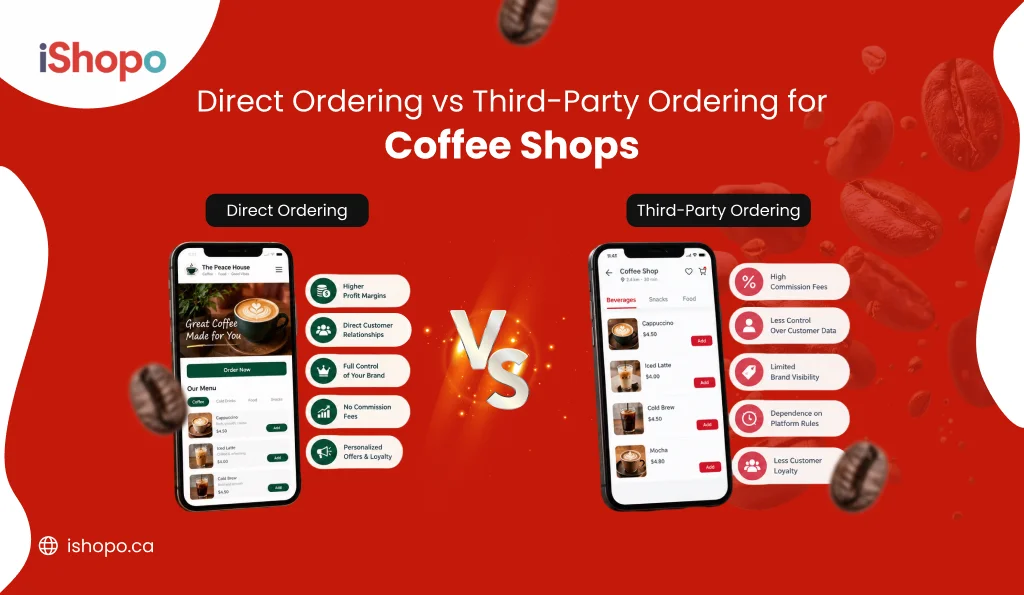
| Feature | Uber Eats | Your Own Ordering System (iShopo) |
| Commission | 15%–30% | 0% |
| Customer Data | Not shared | Fully owned |
| Branding | Limited | Complete |
| Profit Margin | Lower | Higher |
| Control | Limited | Full |
| Loyalty Programs | Restricted | Customizable |
| Repeat Customer Strategy | Difficult | Easy |
Uber Eats helps you get discovered. Your direct ordering platform helps you stay profitable.
Both are important, just not equally important.
Conclusion
Understanding the commission fees of Uber Eats is more than just knowing the percentage that is taken from each order. It is about understanding how these costs affect your restaurant’s ability to grow, remain profitable, and be competitive in an increasingly crowded market. On the one hand, Uber Eats brings great value to the table; customer reach, visibility, and convenience; but on the other hand, these advantages come with hefty costs, which, if not managed properly, can eat away at your margins.
The restaurants that succeeded in the current scenario did not turn down the option of Uber Eats; instead, they made the best of it. They introduced the order delivery service as a way to get seen and found but did not actually depend on it for their major income. Instead, they rely on direct order routes and advanced enterprise web solutions to maintain the customer data, profit margins, and their long-term sustainability.
Real success comes from balance:
- Use Uber Eats to get noticed.
- Use your own systems to grow.
That’s where iShopo becomes essential. iShopo helps restaurants shift from commission-heavy platforms to an independent commission free online ordering system that keeps profits where they belong—with the business owner. With features like a fully branded website and app, 0% commission, full customer data access, WhatsApp ordering, loyalty programs, and automated order management, iShopo empowers restaurants to scale sustainably.
Uber Eats brings customers.
iShopo helps you keep them and keep the profits.
FAQ’s
1. Why does Uber Eats charge such high commissions?
Uber Eats commissions cover customer acquisition, delivery logistics, app maintenance, payment processing, and customer support. The fees reflect the platform’s operational costs and the convenience it provides to restaurants and diners.
2. Are Uber Eats fees the same for all restaurants?
No. Commissions vary based on service type (delivery vs. pickup), location, restaurant volume, and agreement terms. Delivery partnerships usually cost more, while pickup-only models have lower commission rates.
3. Can a restaurant stay profitable while using Uber Eats?
Yes, if managed carefully. Restaurants that optimize menu pricing, focus on high-margin items, limit promotions, and build a direct ordering channel are far more likely to stay profitable while still benefiting from Uber Eats visibility.
4. Why doesn’t Uber Eats share customer data with restaurants?
Uber Eats keeps customer data private to protect platform control and ensure users stay within the app. As a result, restaurants cannot build loyalty programs or remarketing campaigns unless they use their own ordering system.
5. Is it necessary for restaurants to build their own ordering platform?
Not mandatory, but highly beneficial. Owning a direct ordering system helps restaurants avoid commissions, access customer data, build loyalty programs, and increase long-term profitability. Many restaurants use Uber Eats for visibility but rely on their own platform for sustainable growth.