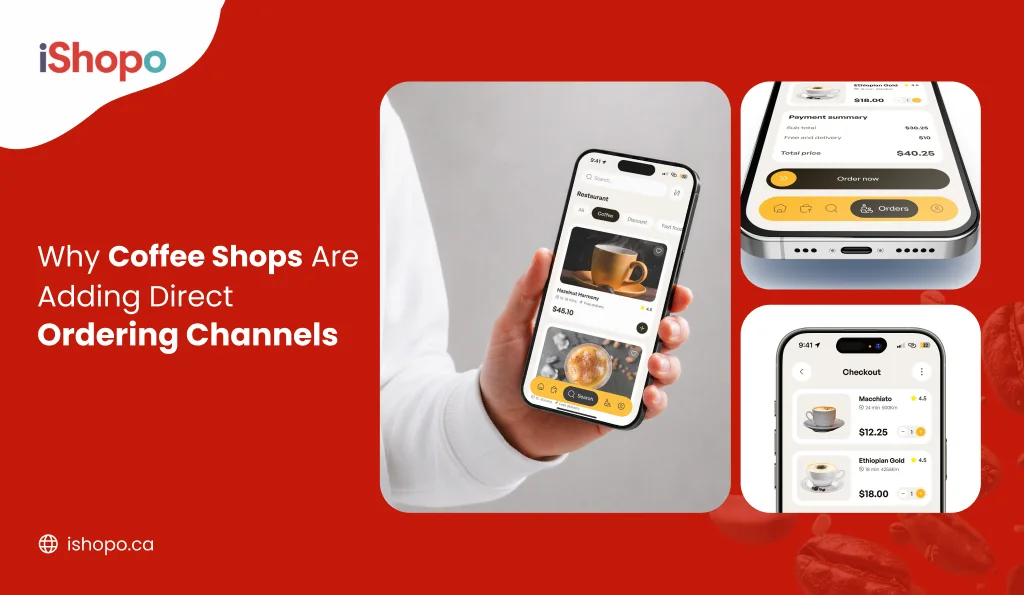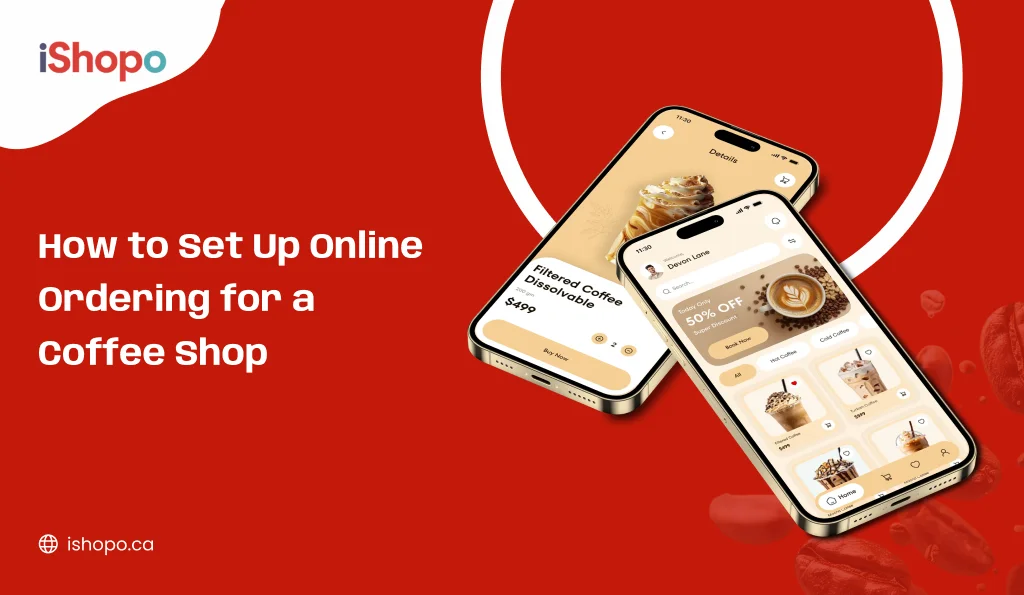

A custom mobile ordering app for a restaurant or coffee shop costs between $30,000 and $250,000+ to build. You’ll also pay 15% to 20% of that every year to keep it running. A ready-made, commission-free ordering app gets you the same core result for about $99 to $499 a month, and you can be live in days instead of months.
That gap is the whole story. Most independent cafés and restaurants don’t need to pay an agency for a six-month build. They need their own branded app, their own customer list, and a way to stop giving 15% to 35% of every order to delivery apps.
Still, some businesses do need something custom. Maybe you run 20 locations across three countries, a ghost kitchen brand, or an ordering flow no platform supports. So this guide covers both paths. You’ll see what each feature costs, how prices change by region, what local rules add, and how the math works for a real coffee shop and pizza restaurant.
What a Mobile Ordering App Costs in 2026: The Short Answer
There are five ways to get a mobile ordering app. Each one sits at a very different price point.
| Route | Upfront Cost | Ongoing Cost | Time to Launch | Best For |
| DIY app builder | $0 to $1,500 | $40 to $250/month | 2 to 6 weeks | Testing an idea on a tight budget |
| Commission-free ordering platform (like iShopo) | $0 setup | $99 to $499/month per location | A few days | Most cafés, restaurants and small chains |
| Freelance developer | $15,000 to $45,000 | $2,000 to $8,000/year | 3 to 6 months | Simple apps with a trusted freelancer |
| Offshore or hybrid agency | $30,000 to $110,000 | 15% to 20% of build cost/year | 4 to 8 months | Custom features on a mid budget |
| North American or Western European agency | $70,000 to $250,000+ | 15% to 25% of build cost/year | 6 to 12 months | Large chains with unique workflows |
Note: These are typical 2026 market ranges. Your quote will depend on features, platforms and the team you hire.
Look at the second row. It’s the only route with no build bill at all. You rent a finished, tested direct ordering system and put your own brand on it.
The custom routes make sense in a few cases. We’ll get to those later. But for a single café or a 3-location restaurant, the build cost alone can equal 10 to 20 years of platform fees.
Why Coffee Shop and Restaurant Mobile Ordering Apps Cost Different Amounts
A coffee shop and a sit-down restaurant can both use a mobile ordering app. They just use it very differently. That changes what you’d pay to build one.
What a Coffee Shop Ordering App Needs
Coffee shops live on speed and repeat visits. The same customer might order an oat milk latte five mornings a week.
So a café app needs heavy drink customization. Size, milk, extra shots, syrups, temperature. Each of these is a “modifier,” and every modifier adds logic to the build. Cafés also need order-ahead with pickup times, so the drink is ready when the customer walks in. And they need a simple loyalty program, like a digital stamp card.
Then there’s the morning rush. Between 7 and 9 a.m., your app might take more orders than it does the rest of the day. A custom build has to handle that spike without slowing down. Testing for it costs money.
iShopo’s coffee shop ordering app already comes with drink modifiers, loyalty and order-ahead built in.
What a Restaurant Ordering App Needs
Restaurants usually have bigger menus and more ways to serve. You might take dine-in orders by QR code, run pickup, and handle your own delivery zones all at once.
That means more screens and more rules. Delivery needs zones, fees and driver tracking. Dine-in needs table numbers. Bigger orders need tipping, split options and scheduled orders for catering.
A pizza shop adds its own layer. Half-and-half toppings, crust choices and combo deals are tricky to code well.
How This Changes Your Budget
In a custom build, a simple café app with pickup only sits near the low end of the range. A full-service restaurant app with delivery, dine-in and catering sits in the middle or higher. A multi-location chain can climb past $150,000.
On a platform, the price doesn’t change much between the two. The features already exist. You switch on the ones you need.
Mobile Ordering App Development Cost by Feature
If you’re going the custom route, it helps to see where the money goes. Here’s a rough breakdown for a mid-range agency build. Offshore teams can come in lower. North American and Western European agencies usually come in higher.
| Feature | What It Covers | Typical Custom Cost |
| Menu, cart and checkout | Browsing, modifiers, cart, order placement | $9,000 to $22,000 |
| Payments | Card, Apple Pay, Google Pay, refunds | $4,000 to $11,000 |
| Customer accounts | Sign-up, saved cards, order history, one-tap reorder | $4,000 to $9,000 |
| Loyalty program | Points or stamps, rewards, redemption | $6,000 to $18,000 |
| Push notifications | Order updates and promos | $2,000 to $6,000 |
| Admin dashboard | Menu edits, order management, reports | $7,000 to $22,000 |
| POS integration | Sync with Square, Toast, Clover or others | $7,000 to $30,000 per POS |
| Delivery management | Zones, fees, driver dispatch and tracking | $11,000 to $36,000 |
| QR table ordering | Dine-in ordering from the table | $4,000 to $11,000 |
| Multi-language support | Second language across app and admin | $3,000 to $11,000 per language |
Add design, testing and project management on top. Those often take up another 25% to 35% of the total.
Why POS Integration Costs So Much
POS integration is the line that surprises most owners. Your app has to talk to your point of sale in real time. Menu changes, prices, stock and orders all have to flow both ways.
Every POS has its own rules. Build for Square and you still need a separate job for Clover. If you switch to POS in two years, you pay again.
A platform handles this for you. iShopo already connects with Square, Toast, Clover and Lightspeed, so your menu syncs from day one. Here’s how the Square POS integration works if you’re on Square.
The Features You Can Skip at First
You don’t need everything on launch day. A café can start with ordering, payments, accounts and loyalty. Delivery can wait. So can AI menu suggestions.
Agencies often pitch big feature lists. But every extra feature means more testing and more to maintain later. Start small, learn what customers use, then add.
Local Rules That Affect Your Restaurant App Cost
Every country has its own tax, language and privacy rules. Your app has to follow them, and each one adds work to a custom build.
Sales Tax, VAT and GST
Your app has to charge the right tax in the right place. In the United States, sales tax changes by state and often by city. The UK and most of Europe use VAT, and food can be taxed at different rates depending on whether it’s hot, cold, eaten in or taken away. Canada mixes GST, HST and provincial taxes. Australia and India use GST with their own rules for food.
For a coffee shop, this gets fiddly fast. A hot drink and a cold sandwich can fall under different rates in some countries. A custom app needs every rule coded and tested. Get it wrong and you either overcharge customers or underpay the tax office.
If you plan to open in more than one state, province or country, budget for this early.
Language Requirements
Some markets require more than one language. Quebec in Canada requires French for commercial apps. Many European countries expect ordering in the local language. Restaurants in multilingual cities often want two or three languages anyway.
Adding a language isn’t just translating a few buttons. Menus, receipts, emails, push messages and error text all need a version. And each menu update means updating every language.
Privacy Rules for Customer Data
Once customers create accounts, you’re holding personal data. Names, emails, phone numbers, order history. Most countries have laws about how you collect and store it. GDPR covers the EU and UK. California has the CCPA. Canada has PIPEDA. India has the DPDP Act.
A custom build needs a privacy policy, consent screens and secure storage that meet the rules where you operate. Your agency should cover this. Ask them directly.
Local Payment Options
Customers expect to pay the way they already pay. That might be Apple Pay and Google Pay in the US, Interac in Canada, UPI in India, or local wallets across Europe and Asia. Make sure whatever you build or buy supports a processor that works well in your country, with payouts in your local currency.
The Real Cost of Relying on DoorDash, Uber Eats and Deliveroo
Here’s the part most app cost guides leave out. Not having your own mobile ordering app also costs money. You pay it every day, one order at a time.
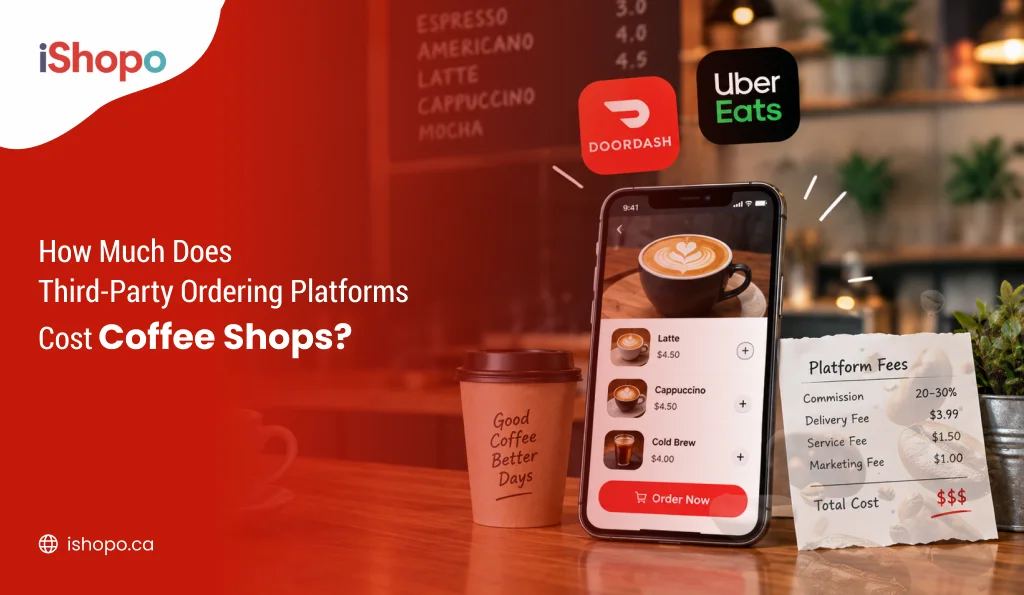
Delivery apps charge restaurants a commission on every order, and the rates look similar around the world. In the US, DoorDash and Uber Eats plans commonly run from 15% to 30%. In Canada, SkipTheDishes, DoorDash and Uber Eats sit in the same 15% to 30% range, with entry-level plans rising to 20% in March 2026. In the UK, Just Eat, Deliveroo and Uber Eats take roughly 15% to 35% depending on the plan. Pickup orders usually cost less, but still carry a fee.
Now put that next to your margin. Most restaurants and takeaways keep a small slice of each sale as profit. When the platform takes a quarter of the order, it can earn more from your kitchen than you do.
What a Commission-Free Ordering App Changes
A commission-free ordering app flips this. The customer orders from your app. You pay a flat monthly fee, plus normal card processing like you’d pay at your counter. No cut per order.
The more orders you move to your own app, the more you save. A busy month doesn’t mean a bigger bill.
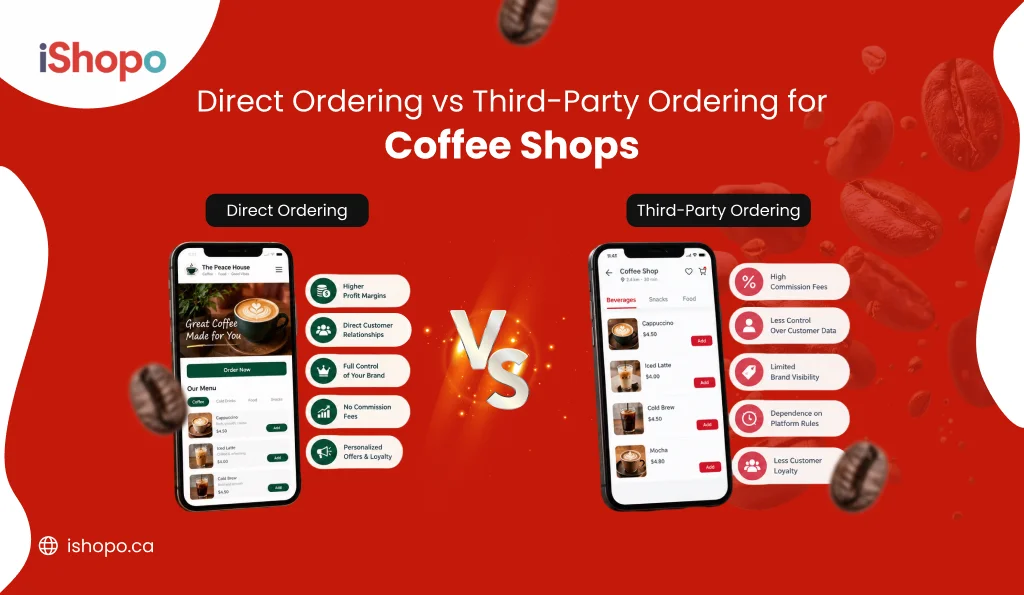
You also own the customer. Delivery apps keep the customer’s name, email and order history. With your own app, that list is yours. You can send an offer on a slow Tuesday. You can reward your regulars. Try doing that through a marketplace.
We’ve covered this in more depth in our guide to the best alternative to DoorDash, GrubHub and UberEats.
Should You Leave the Delivery Apps Completely?
Probably not right away. Delivery apps are good at finding new customers. Many restaurants keep them for discovery and push repeat customers toward their own app.
That’s the smart middle path. New people find you on Uber Eats or Deliveroo. Then a small card in the bag offers 10% off their next order in your app. Over time, more of your regulars order directly.
Custom Build vs Commission-Free Ordering App: A 3-Year Cost Comparison
A monthly fee can look expensive next to a one-time build. So let’s compare the full cost over three years. That’s the honest way to judge it.
| Cost Item | Custom Build (Mid-Range Agency) | iShopo App Commerce Plan |
| Upfront build | $70,000 | $0 |
| Maintenance and updates (Years 1 to 3) | $35,700 (about 17% a year) | Included |
| Hosting and servers | $3,000 to $9,000 | Included |
| App store fees | About $325 | Included in app store submission and support |
| POS integration updates | $5,000 to $15,000 | Included |
| Platform fees | $0 | $17,964 ($499 x 36 months) |
| 3-year total | About $114,000 to $130,000 | About $18,000 |
Custom build figures are typical estimates. iShopo pricing is per location, per month. Check the current iShopo pricing plans before you budget.
That’s roughly a six-to-one difference over three years. And the custom app takes six months or more before it earns a single dollar. The platform app can be taking orders in days.
When a Custom Build Still Makes Sense
To be fair, the custom route wins in some cases:
- You run a large chain (15+ locations) and need deep links into your own ERP or warehouse systems.
- You’re building a marketplace with many restaurants, not an app for your own business.
- Your ordering flow is truly unusual, like a subscription meal plan with custom rules.
- You want to own the source code outright, maybe to sell the tech later.
If none of these fit you, a commission-free platform is almost always the better deal.
Top 3 Companies for Custom Restaurant App Development
Some businesses really do need a custom build. If you’re one of them, the team you pick matters more than the price on the quote. A cheap build that breaks during the Friday dinner rush costs more in the end.
Here are the three development companies we recommend for a custom mobile ordering app. Each one fits a slightly different kind of restaurant business.
Top 3 Restaurant App Development Companies at a Glance
| Company | Based In | Best For | Restaurant Strength |
| iTechnolabs | Canada, serving clients worldwide | Restaurants and chains that want custom features on a proven ordering base | Built the iShopo ordering platform used by food businesses |
| Calgary App Developer | Calgary, Canada | Cafés and restaurant groups building a first app or MVP | Focused app team, backed by iTechnolabs |
| Appinventiv | Global, with offices in North America, Europe, the Middle East, Asia and Australia | Enterprise brands with multi-market needs | Portfolio includes KFC, Domino’s and Pizza Hut |
1. iTechnolabs
iTechnolabs is a global software company headquartered in Canada that builds mobile apps, web platforms and POS solutions for clients around the world. It’s also the team behind iShopo itself. That matters here. They’ve already built a working restaurant ordering system used by real food businesses, so they know how menus, modifiers, POS sync and app store approvals work in real life.
This makes iTechnolabs a strong fit if you want something custom but don’t want to start from zero. They can extend a proven ordering base with your own features, which often means a faster build and a lower bill than a blank-page project.
Best for: Restaurants and chains anywhere that want custom features on top of a proven ordering system.
Keep in mind: Like any agency, a fully custom build still takes months. Get a clear scope and timeline in writing before you start.
2. Calgary App Developer
Calgary App Developer is a Calgary-based app development company, backed by iTechnolabs. The team builds iOS, Android and web apps for startups and growing businesses, from first MVP to full product, and works with clients remotely as well as locally.
This is a good pick for café owners and restaurant groups who want a focused team for a first app. North American clients also get the bonus of a nearby time zone. Quick calls during a launch week are easier when your developers keep similar hours.
Best for: Coffee shops and restaurants that want a dedicated partner for an MVP or a first custom app.
Keep in mind: Ask to see restaurant or food ordering work from their portfolio, and talk through how they’ll handle POS integration for your system.
3. Appinventiv
Appinventiv is a large global development firm with offices in India, the US, the UK, the UAE, Australia and Canada. Its restaurant portfolio includes work for big QSR brands like KFC, Domino’s and Pizza Hut. The firm’s own cost guide puts restaurant apps between $30,000 and $400,000+.
Appinventiv suits large chains and enterprise brands. Think multi-country rollouts, heavy delivery logistics or AI features across hundreds of locations.
Best for: Enterprise restaurant brands with big budgets and complex, multi-market needs.
Keep in mind: Their pricing and process are built for large projects. A single café or small restaurant will likely find the budget hard to justify.
How to Choose Between Them
Start with your size. A one or two location business rarely needs a custom build at all. A growing regional chain fits iTechnolabs or Calgary App Developer. A national or global brand may lean toward Appinventiv.
Then ask each company the same questions. What’s included in maintenance? Who owns the code? How do you handle POS changes? How long until the first working version? Their answers will tell you a lot.
Ongoing Costs of Running a Direct Ordering System
Launch day isn’t the finish line. Every app has running costs. Here’s what to plan for with a custom build.
Maintenance. Budget 15% to 20% of your build cost each year. This covers bug fixes, security patches and small changes. On a $70,000 app, that’s $10,500 to $14,000 a year.
Phone updates. Apple and Google release new versions of iOS and Android every year. Your app has to keep up, or it may stop working well on new phones.
Hosting. Your app runs on servers. A small café might spend $40 to $200 a month. A busy multi-location restaurant will spend more.
App store fees. Apple charges $99 a year for its developer program. Google Play charges a one-time $25 fee.
Payment processing. You’ll pay card fees on every order, just like at your counter. This is true for custom apps and platforms alike.
Third-party services. Maps, text messages and email services often charge by usage.
With a commission-free platform, most of these are bundled into your monthly plan. iShopo’s App Commerce plan includes the branded apps, app store submission and ongoing updates. You still pay your normal card processing fees through your own processor.
How Long It Takes to Build a Direct Ordering Mobile App
Time matters as much as money. Every month without your own app is another month of commission going out the door.
A custom app usually follows this path:
| Stage | Typical Time |
| Planning and scope | 2 to 4 weeks |
| Design | 3 to 6 weeks |
| Development | 8 to 20 weeks |
| Testing | 3 to 6 weeks |
| App store review and launch | 1 to 3 weeks |
| Total | 4 to 9 months |
Big multi-location or multi-country builds can run past a year.
A platform works differently. With iShopo, you sign up, connect your POS and your menu pulls in on its own. Most restaurants go live in a few days. The biggest wait is often Apple and Google reviewing the app.
Smart Ways to Lower Your Mobile Ordering App Cost
Whichever route you take, a few choices keep your costs down.
Start with the problem, not the feature list. What do you actually want? If it’s “stop paying 25% on repeat orders,” you don’t need AI menu suggestions. You need a clean app your regulars like using.
If you do go custom, build one app for both iPhone and Android. Cross-platform tools like Flutter and React Native let one team write the app once. That can cut the build cost a lot compared to two separate native apps.
Pick your POS before you build. Changing POS halfway through a custom project means paying for a second integration.
Launch with web ordering too. Not everyone will download an app on their first order. A simple ordering page on your website catches those people. iShopo includes web ordering with every plan, along with QR code ordering for dine-in.
And don’t pay for what you can rent. Payments, maps and push notifications all exist as ready services. Rebuilding them from scratch is money you won’t get back.
Why iShopo Is the Smart Way to Get a Commission-Free Ordering App
iShopo is a commission-free online ordering platform for restaurants, cafés and food businesses. It helps you take direct orders through your own branded app and website. Best for: independent restaurants, coffee shops, bakeries, pizza shops, QSRs and growing multi-location brands.
Here’s what makes it the practical choice for most owners.
Your own branded app. You get a branded mobile app on the App Store and Google Play with your logo, colors and menu. Customers see your business, not a marketplace full of competitors.
Zero commission, always. You pay a flat monthly fee per location. A record month doesn’t mean a record bill.
POS sync from day one. Connect Square, Toast, Clover or Lightspeed, and your menu, prices and stock stay in step across your POS, app and website.
Loyalty and marketing included. Reward regulars, send push offers and build a customer list you own.
Live in days. No six-month build. No agency project to manage.
iShopo also offers a white label food ordering option on its Enterprise plan for businesses that want deeper customization or API access.
Final Take: Build Smart, Not Big
A custom mobile ordering app can cost $30,000 to $250,000+ and take most of a year. For a large chain with unusual needs, that can be worth it, and the right development partner makes a real difference.
For most restaurants and coffee shops, it isn’t the best use of money. A commission-free ordering app gives you your own brand, your own customers and your own margins, for a monthly fee that costs less than a week of delivery app commission.
Ready to see it with your own menu? Book a free iShopo demo and get your branded app live in days, not months.
Frequently Asked Questions
How much does it cost to build a mobile ordering app for a restaurant?
A custom mobile ordering app costs about $30,000 to $250,000+ to build, depending on features and where your development team is based. Yearly upkeep usually adds 15% to 20% of the build cost. A commission-free platform like iShopo costs about $99 to $499 a month per location with no build fee.
How much does a coffee shop ordering app cost?
A custom coffee shop app with order-ahead, drink modifiers and loyalty usually costs $30,000 to $70,000 to build. On iShopo, a café can get a branded iOS and Android app on the App Commerce plan for $499 a month. Web ordering starts at $99 a month.
What is a direct ordering system?
A direct ordering system lets customers order and pay straight from your business, through your own app or website. There’s no marketplace in the middle taking a commission. You keep the customer data and the full order value, minus normal card fees.
Is a commission-free ordering app really free of fees?
Commission-free means no percentage is taken from each order. You still pay a flat monthly platform fee and your regular card processing fees. With iShopo, your processing runs through your own POS provider at your usual rates.
How long does it take to build a direct ordering mobile app?
A custom build usually takes 4 to 9 months from planning to launch. Larger projects can take a year or more. With iShopo, most restaurants go live in a few days once they connect their POS, with app store review being the main wait.
Should I build a custom app or use an ordering platform?
Use a platform if you’re an independent restaurant, café or small chain that wants direct orders fast and at low cost. Consider a custom build if you run a large chain with unusual systems, or you’re building a multi-restaurant marketplace. For most food businesses, the platform is the better value.